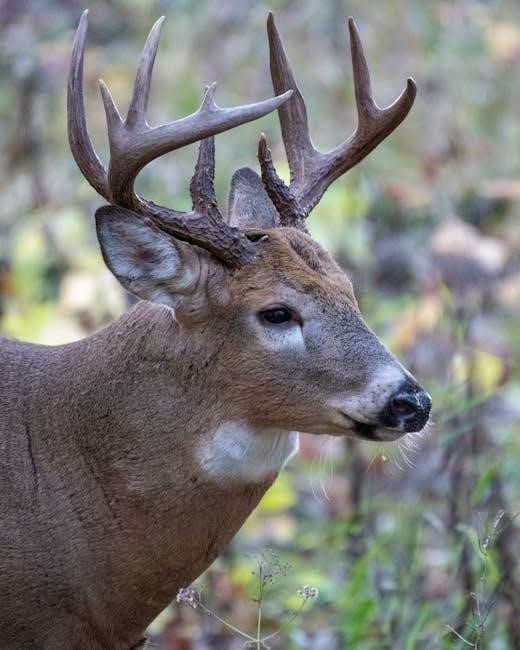
Michigan Deer Hunting Guide ⎼ 2025/2026
Michigan’s 2025/2026 deer hunting season features updated regulations, including antlerless deer access permits and changes to combo licenses in the southern Lower Peninsula.
Michigan deer hunting is a deeply ingrained tradition, attracting both resident and non-resident hunters annually. The state boasts a substantial deer population, managed carefully by the Michigan Department of Natural Resources (DNR) to ensure sustainable harvests. Hunting opportunities are diverse, ranging from archery and firearm to muzzleloader seasons, catering to various preferences.
Recent regulatory adjustments, effective through the 2023-2025 cycle, impact license requirements and hunting strategies. Notably, antlerless deer harvests now necessitate both an antlerless deer hunting access permit specific to the DMU and a universal antlerless deer license. Understanding these changes is crucial for a successful and compliant hunt. The DNR actively monitors deer populations, with 2024 data indicating shifts in harvest numbers between the Upper and Lower Peninsulas.
This guide provides comprehensive information for the 2025/2026 season, ensuring hunters are well-prepared and informed.
Understanding Michigan Deer Management Units (DMUs)
Michigan is divided into numerous Deer Management Units (DMUs), each with specific regulations tailored to local deer populations and habitat. These units are crucial for effective deer management, allowing the DNR to adjust hunting opportunities based on regional needs. Hunters must be aware of the DMU-specific rules before hunting, as regulations can vary significantly.
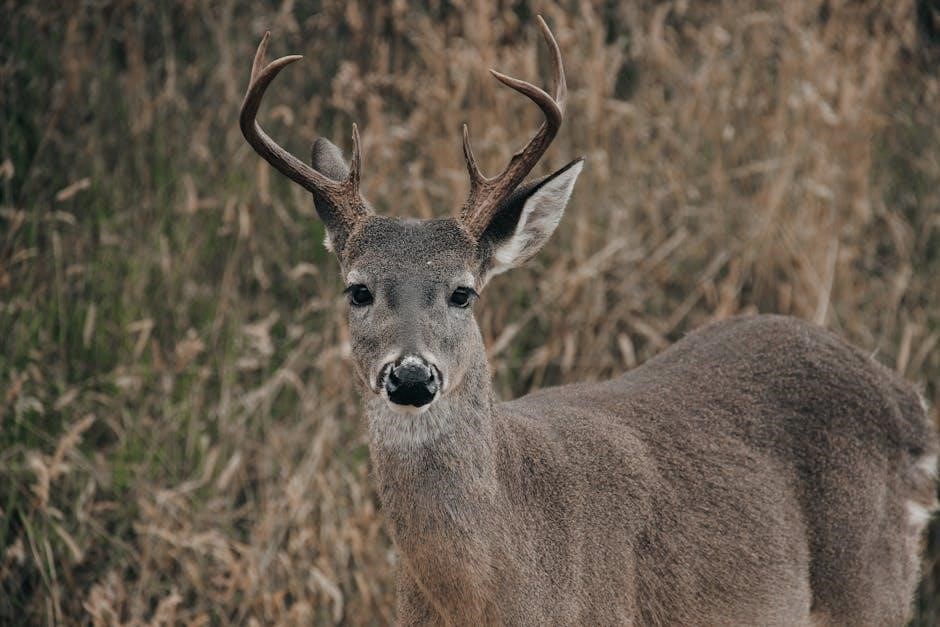
Antlerless deer hunting access permits are now required in addition to the universal antlerless license for specific DMUs, including 17, 21, 27, 36, 117, 149, 152, 249, 252, and 349. Understanding your DMU’s boundaries and associated regulations is paramount for legal and ethical hunting. The DNR website provides detailed maps and regulation summaries for each DMU, essential resources for planning your hunt.
Careful consideration of DMU regulations maximizes hunting success and contributes to sustainable deer management.
License and Permit Requirements (2025/2026)
For the 2025/2026 hunting season, Michigan hunters require appropriate licenses and permits to legally harvest deer. A base hunting license is fundamental, with options including regular and combination deer licenses. Crucially, hunters harvesting antlerless deer in designated DMUs (17, 21, 27, 36, etc.) must obtain both a universal antlerless deer license and a DMU-specific antlerless deer hunting access permit.
The combination deer license offers versatility, but regulations vary, particularly in the southern Lower Peninsula where licenses now include unrestricted and four-point restricted tags. Ensure compliance with all permit application deadlines and license display requirements.
Detailed information regarding license fees, application processes, and eligibility criteria is available on the Michigan DNR website.
Types of Deer Hunting Licenses
Michigan offers several deer hunting license options to suit diverse hunter preferences and hunting strategies. The Regular Deer License permits the harvest of one deer, either antlered or antlerless, depending on DMU regulations. A Combination Deer License provides greater flexibility, allowing hunters to harvest one antlered deer and one antlerless deer, or two antlerless deer.
The Antlerless Deer License specifically authorizes the harvest of antlerless deer, contributing to population management goals. Hunters should note that in many DMUs, an antlerless license requires an accompanying access permit. Southern Lower Peninsula combination licenses now feature both restricted and unrestricted tags.
Carefully review license restrictions and DMU-specific rules before purchasing.
Regular Deer License
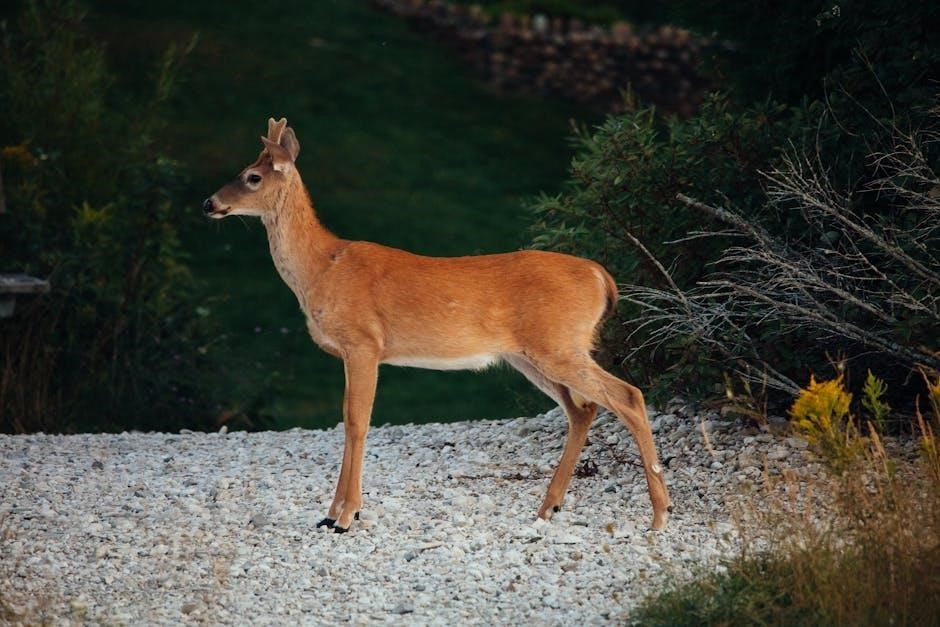
The Regular Deer License is a foundational option for Michigan deer hunters, granting the privilege to harvest a single deer during established hunting seasons. This license allows for the take of either an antlered or an antlerless deer, but the specific regulations governing which may be harvested depend heavily on the designated Deer Management Unit (DMU).
Hunters utilizing a Regular Deer License must be acutely aware of DMU-specific rules regarding antler point restrictions, season dates, and any additional permit requirements. It’s crucial to consult the Michigan DNR’s hunting guide for detailed information pertaining to the chosen DMU.
This license provides a versatile starting point for many hunters.
Combination Deer License
The Combination Deer License offers increased flexibility for Michigan hunters, allowing for the harvest of one antlered and one antlerless deer during designated seasons. In the southern Lower Peninsula, recent regulation changes have introduced a notable distinction: combo licenses now include both an unrestricted regular tag and a four-point restricted tag.
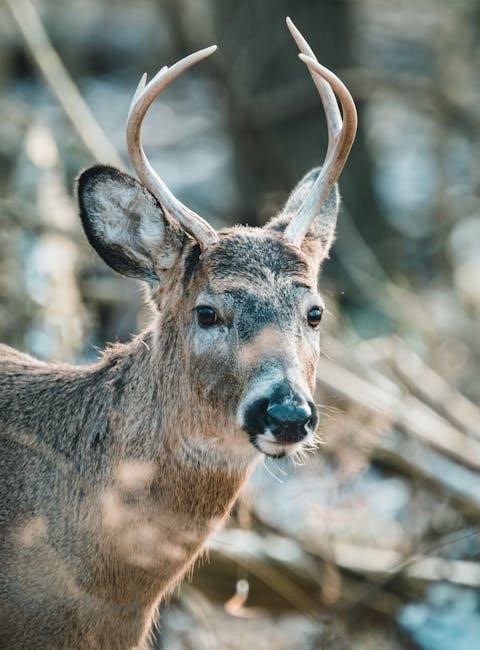
This means hunters must carefully consider which tag to use for each deer harvested, adhering to the specific antler point restrictions associated with the restricted tag. Understanding these nuances is critical for legal and ethical hunting. The license remains valid for use during archery, firearm, and muzzleloader seasons, subject to DMU-specific regulations.
It’s a popular choice for maximizing hunting opportunities.
Antlerless Deer License
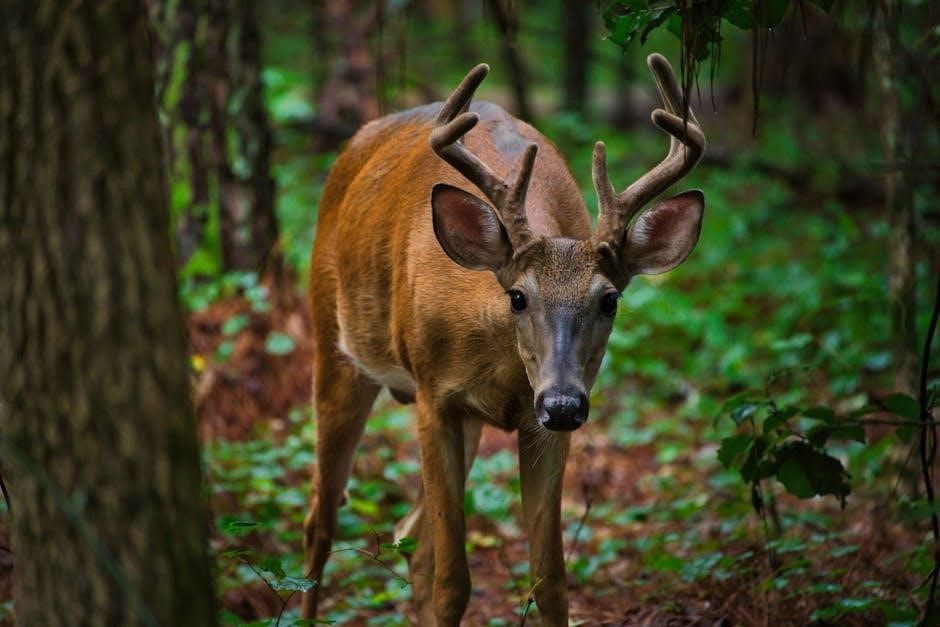
The Antlerless Deer License provides hunters with opportunities to harvest does (female deer), playing a crucial role in deer population management within specific Deer Management Units (DMUs); For the 2025/2026 season, a significant requirement has been implemented: hunters must obtain one antlerless deer hunting access permit for the DMU they are hunting, in addition to the universal antlerless deer license.
This permit system aims to better control harvest levels and ensure sustainable deer populations. Antlerless deer can be legally taken in designated DMUs – including 17, 21, 27, 36, and others – during the archery season using either a single deer license or the combination deer license, extending until December 10th.
Careful planning is essential for successful antlerless deer hunting.
Important Regulation Updates (2023-2025 Cycle)
The Michigan Department of Natural Resources (DNR) has approved a three-year cycle of deer hunting regulations, spanning 2023, 2024, and 2025 seasons, ensuring stability for hunters planning multi-year strategies. A key update involves changes to combination deer licenses in the southern Lower Peninsula.
Specifically, all deer combo licenses in these counties now include an unrestricted regular tag and a four-point restricted tag, offering hunters flexibility while maintaining population control measures. These regulations took effect on August 1st, impacting how hunters approach their harvests.
These updates reflect ongoing efforts to balance hunter opportunity with responsible deer management practices across the state.
Four-Point Antler Point Restriction
Michigan’s four-point antler point restriction is a crucial component of deer management, particularly in specific regions. This regulation dictates that hunters cannot harvest a deer with fewer than four points on one antler, promoting the growth of mature bucks within the herd.
However, the application of this restriction varies. In the southern Lower Peninsula, all deer combo licenses now feature both an unrestricted regular tag and a four-point restricted tag, offering hunters choices. Understanding these nuances is vital for legal and ethical hunting.
The DNR continually assesses the effectiveness of this restriction, adjusting regulations as needed to optimize deer populations and hunting opportunities.
Southern Lower Peninsula Regulations
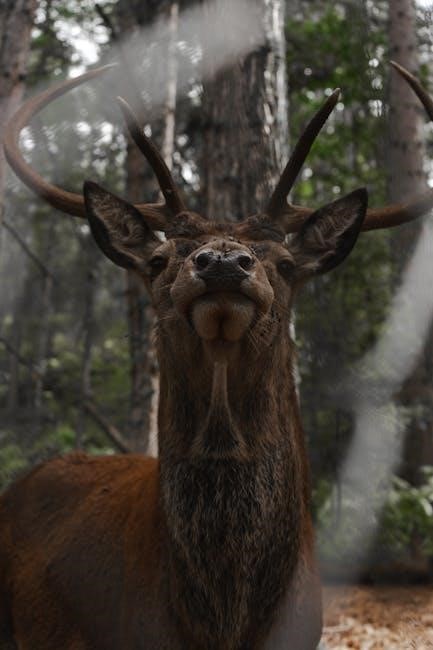
Southern Lower Peninsula deer hunting regulations are characterized by a unique combination of restrictions and opportunities. Notably, all deer combo licenses now include an unrestricted regular tag alongside a four-point restricted tag, providing hunters with flexibility.
This dual-tag system allows for the harvest of any legal deer on the unrestricted tag, while the four-point restriction applies to the other. Hunters must carefully understand which tag they are using at the time of harvest to ensure compliance.
These regulations aim to balance buck harvest with population management, promoting healthy deer herds throughout the region.
Northern Michigan Regulations
Northern Michigan deer hunting regulations generally maintain a more traditional approach compared to the southern region. While specific DMU regulations vary, the four-point antler point restriction isn’t universally applied as it is in the southern Lower Peninsula.
Hunters in Northern Michigan should consult the specific DMU regulations for their hunting location, as these can differ significantly. Understanding these localized rules is crucial for a successful and legal hunt.
Population management strategies in Northern Michigan focus on maintaining healthy deer numbers while considering the unique ecological factors of the region, often prioritizing overall herd health and sustainability.
Hunting Seasons in Michigan
Michigan’s deer hunting seasons are structured to accommodate diverse hunter preferences and manage deer populations effectively. The archery season, a popular choice for many, runs until December 10, 2024, allowing for extended hunting opportunities with bows and crossbows.
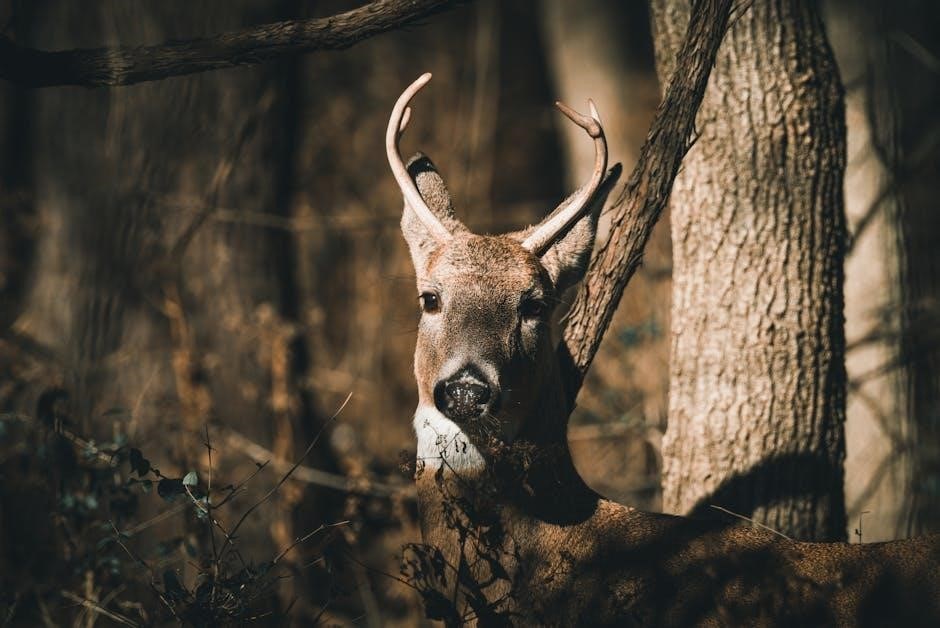
The firearm season, a tradition for many Michigan hunters, offers a concentrated period for harvesting deer. Following this, the muzzleloader season provides a unique hunting experience utilizing traditional firearms.
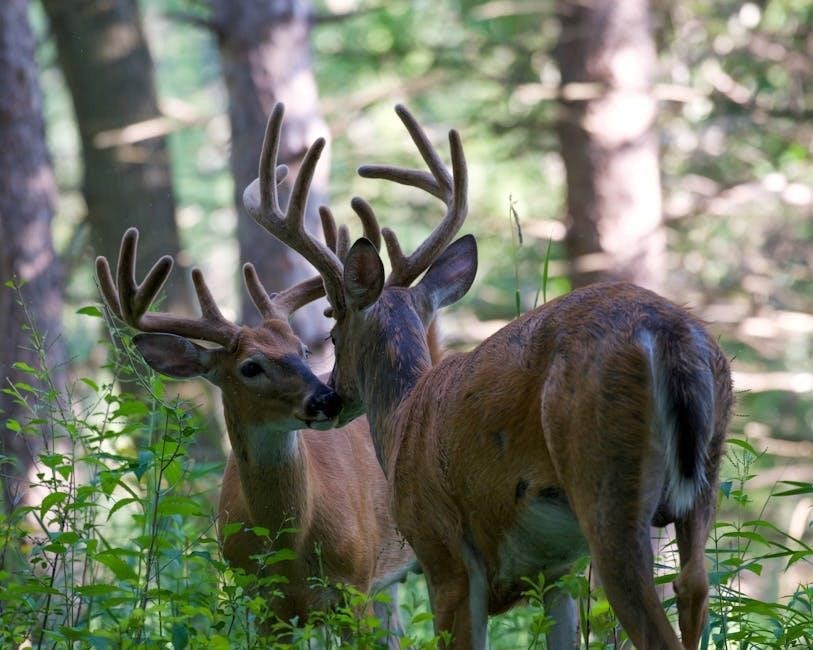
These seasons are carefully timed to coincide with the deer breeding cycle and ensure sustainable harvest levels. Hunters must adhere to specific regulations for each season, including legal hunting hours and weapon restrictions.
Archery Season Dates & Regulations
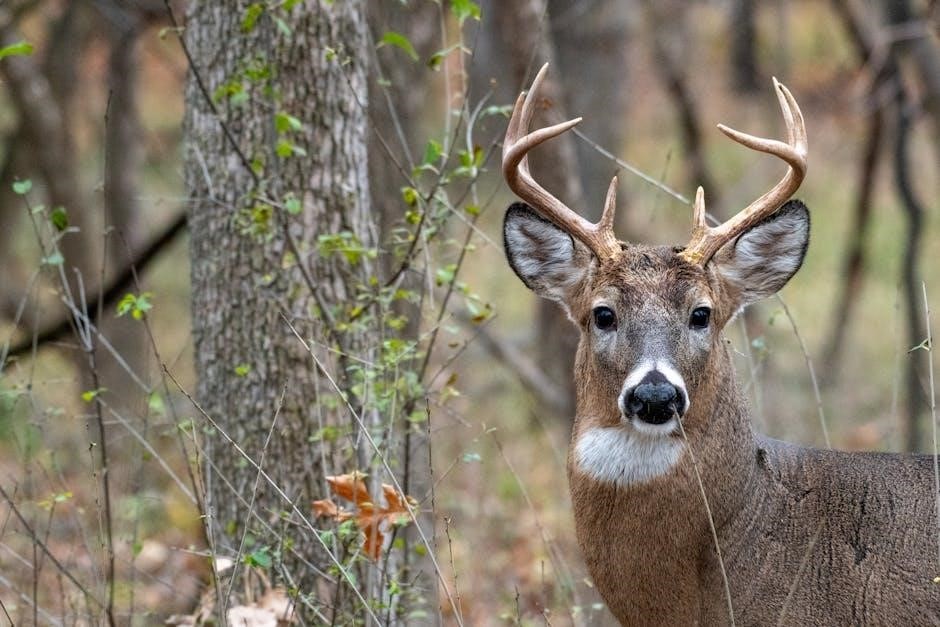
Michigan’s archery season provides an extended opportunity for deer hunters utilizing bows and crossbows. The season typically begins in October and extends through December, offering ample time to pursue deer. Hunters participating in archery season must possess a valid deer license – either a single deer license or a combination license.
Specific regulations apply to archery equipment, ensuring fair chase and hunter safety. These include restrictions on arrow weight and broadhead types. Antlerless deer can be harvested in designated DMUs with the appropriate access permit and universal antlerless license.
Always consult the official Michigan DNR hunting guide for precise dates and detailed regulations before participating in the archery season.
Firearm Season Dates & Regulations
Michigan’s firearm deer season is a highly anticipated event for many hunters, typically occurring in November and December. This season allows hunters to utilize rifles and shotguns for deer harvest. A valid deer license is required for participation, with options including the regular deer license and the combination deer license.
Regulations govern legal hunting hours, permissible firearms, and tagging requirements. Hunters must adhere to specific DMU regulations regarding antler point restrictions and antlerless deer harvest opportunities. The four-point antler restriction impacts certain areas, particularly in the southern Lower Peninsula.
Review the official Michigan DNR hunting guide for precise dates, zone-specific rules, and safety guidelines before heading into the field.
Muzzleloader Season Dates & Regulations
Michigan’s muzzleloader season provides a unique hunting experience, typically occurring after the firearm season, extending deer hunting opportunities into later months. This season specifically requires the use of muzzleloading firearms – those loaded from the muzzle – adding a historical element to the hunt.
Hunters participating in the muzzleloader season must possess a valid deer license, and regulations regarding DMU-specific rules, antler point restrictions, and legal hunting hours apply. Antlerless deer harvest opportunities may be available depending on the DMU.
Consult the official Michigan DNR hunting guide for precise season dates, permitted muzzleloader specifications, and safety regulations before participating.
Liberty Hunt – Special Regulations
Michigan’s Liberty Hunt is a special two-day hunting season designed specifically for hunters with disabilities. This event provides an opportunity for individuals with qualifying disabilities to enjoy hunting in a supportive and accessible environment, typically held in September before other deer seasons open.
Regulations for the Liberty Hunt differ from standard deer hunting seasons. Hunters must obtain a Liberty Hunt permit, and specific rules regarding weapon types, hunting locations, and assistance from others apply. The DNR strives to create an inclusive hunting experience.
Detailed information regarding eligibility, permit applications, and specific regulations can be found on the Michigan DNR website.
Deer Harvest Reporting Requirements
Michigan hunters are required to report their deer harvest to the Department of Natural Resources (DNR) promptly after taking a deer. This reporting is crucial for the DNR to monitor deer populations, track disease prevalence, and inform future management decisions.
Harvest reporting can be completed online through the Michigan DNR E-License system or by phone. Hunters will need their deer license number and details about the harvested deer, including the DMU, date of harvest, and sex of the animal.
Failure to report a deer harvest can result in penalties. Accurate and timely reporting is vital for effective deer management in Michigan.
Antlerless Deer Hunting Access Permits
For each deer harvested in Michigan, hunters now require one antlerless deer hunting access permit specific to the Deer Management Unit (DMU) where the deer was taken, in addition to a universal antlerless deer license. This new requirement aims to better manage deer populations at a local level.
These permits are available for purchase online through the DNR E-License system. Hunters must select the correct DMU when purchasing the permit, as it is valid only for that specific unit.
Antlerless deer hunting is permitted in select DMUs, including 17, 21, 27, 36, 117, 149, 152, 249, 252, and 349 during the archery season.
DMU Specific Regulations (Examples)
Deer Management Unit (DMU) regulations can vary significantly across Michigan, necessitating careful review before each hunt. These variations are implemented to address unique population dynamics and habitat conditions within each unit.
DMU 17, for example, may have specific restrictions on antler point size or permit requirements differing from other areas. Similarly, DMU 21 could allow for a longer archery season or a higher quota of antlerless deer permits.
DMU 36 might focus on increasing the buck harvest, leading to different tag availability. Hunters must consult the official Michigan DNR hunting regulations digest for the most current and accurate information pertaining to their chosen DMU.
DMU 17 Regulations
DMU 17, located in the southern Lower Peninsula, presents specific deer hunting regulations designed to manage the local herd. Hunters are required to possess both a universal antlerless deer license and an antlerless deer hunting access permit specific to DMU 17 for each deer harvested.
Archery season allows for antlerless deer harvest on single or combination deer licenses until December 10th. The four-point antler restriction may apply depending on the license type held. Combination deer licenses offer flexibility, but hunters must understand the associated restrictions.
Regular season dates and bag limits are subject to change annually; therefore, consulting the official Michigan DNR regulations is crucial. Hunters should also be aware of any local ordinances or land-use restrictions within DMU 17.
DMU 21 Regulations
DMU 21, situated within Michigan’s diverse landscape, necessitates specific attention to its deer hunting regulations. Like DMU 17, hunters intending to harvest an antlerless deer within DMU 21 must possess both a universal antlerless deer license and a DMU-specific antlerless deer hunting access permit for each deer taken.
Archery season provides opportunities for antlerless deer harvest utilizing either a single or combination deer license, extending until December 10th. Hunters should carefully review their license type to understand any four-point antler restrictions that may be in effect.
Staying informed about seasonal adjustments to bag limits and dates, as published by the Michigan DNR, is vital for legal and ethical hunting practices within DMU 21.
DMU 36 Regulations
DMU 36 hunters must be aware of the specific regulations governing deer harvest within this unit. Similar to DMUs 17 and 21, a crucial requirement for taking an antlerless deer is possessing both a universal antlerless deer license and a dedicated DMU 36 antlerless deer hunting access permit for each deer harvested.
During archery season, hunters with either a single or combination deer license can pursue antlerless deer until December 10th. It’s essential to verify license details regarding potential four-point antler point restrictions applicable to buck harvests.
Regularly checking the Michigan DNR’s updates on bag limits and season dates is paramount for compliant and responsible hunting within DMU 36.
Deer Population Trends in Michigan (2024 Data)
Recent surveys indicate a complex picture of Michigan’s deer population. Preliminary data from 2024 reveals an overall increase in the total deer harvest compared to the previous year, largely driven by a boosted antlerless deer (doe) harvest. This suggests successful management efforts to control population growth in key areas.
However, the regular firearm season saw a reported decrease in deer numbers compared to 2023, continuing a gradual statewide decline. This trend isn’t uniform, as the Upper Peninsula bucked the statewide pattern, showing a positive harvest trend.
Continued monitoring and analysis of harvest data are crucial for adaptive deer management strategies across Michigan’s diverse ecosystems.
Upper Peninsula vs. Lower Peninsula Harvest Trends
Harvest data from 2024 highlights a distinct divergence between the Upper Peninsula (UP) and Lower Peninsula (LP) deer hunting trends. While the statewide harvest increased overall due to higher antlerless deer numbers, the LP experienced a continuation of the gradual decline observed in recent years during the regular firearm season.
Conversely, the UP demonstrated resilience, bucking the statewide trend with a positive harvest outcome. This suggests differing environmental factors, deer densities, or hunter participation rates between the two regions.
Understanding these regional variations is vital for tailoring deer management strategies to specific ecological conditions and ensuring sustainable hunting opportunities across Michigan.
Hunter Safety and Education
Prioritizing safety is paramount for all Michigan deer hunters. The Michigan Department of Natural Resources (DNR) strongly encourages, and in some cases requires, completion of a hunter safety education course before obtaining a hunting license.
These courses cover essential topics like firearm handling, hunting techniques, wildlife identification, survival skills, and ethical hunting practices. Successful completion equips hunters with the knowledge and skills to minimize accidents and promote responsible hunting behavior.
The DNR website provides a comprehensive list of approved courses and instructors throughout the state; Continuous learning and adherence to safety guidelines are crucial for a safe and enjoyable hunting experience for everyone.
Chronic Wasting Disease (CWD) Information
Chronic Wasting Disease (CWD) is a serious concern for Michigan’s deer population. This fatal neurological disease affects deer, elk, and moose, and the DNR actively monitors and manages its spread;
Hunters play a vital role in CWD surveillance. The DNR requests hunters to submit samples from harvested deer, particularly those from designated CWD surveillance areas, for testing. This data helps track the disease’s prevalence and distribution.
Regulations are in place to limit the movement of deer carcasses and parts to prevent further spread. Hunters should familiarize themselves with these rules and practice safe carcass handling procedures. More information and testing locations are available on the Michigan DNR website.
Regulations Regarding Baiting and Feeding
Baiting and feeding deer are subject to strict regulations in Michigan, primarily to mitigate the spread of diseases like Chronic Wasting Disease (CWD) and manage deer populations effectively.
Current regulations generally prohibit the placement of bait and feed in areas where CWD has been detected. Specific county-level restrictions are frequently updated, so hunters must check the DNR’s website for the latest information before each hunting trip.
Permitted baiting materials, when allowed, are often limited to natural foods. The use of manufactured attractants may be restricted or prohibited entirely. Violations of baiting and feeding regulations can result in fines and other penalties.
Legal Hunting Hours
Michigan’s legal hunting hours for deer vary depending on the season. Generally, hunting is permitted from 30 minutes before sunrise to 30 minutes after sunset. However, specific regulations apply to each hunting season – archery, firearm, and muzzleloader – and may differ across various Deer Management Units (DMUs).
During the archery season, hunters can typically hunt during these daylight hours. Firearm and muzzleloader seasons often have similar timeframes, but hunters should always verify the exact start and end times for their specific DMU.
It is crucial to consult the Michigan DNR’s hunting regulations digest for precise legal shooting hours, as they are subject to change annually. Hunting outside of these designated times is illegal and can result in penalties.
Transportation of Deer
Michigan regulations regarding the transportation of deer are designed to prevent the spread of diseases, particularly Chronic Wasting Disease (CWD). A carcass tag must be immediately attached to any harvested deer, remaining visible during transport.
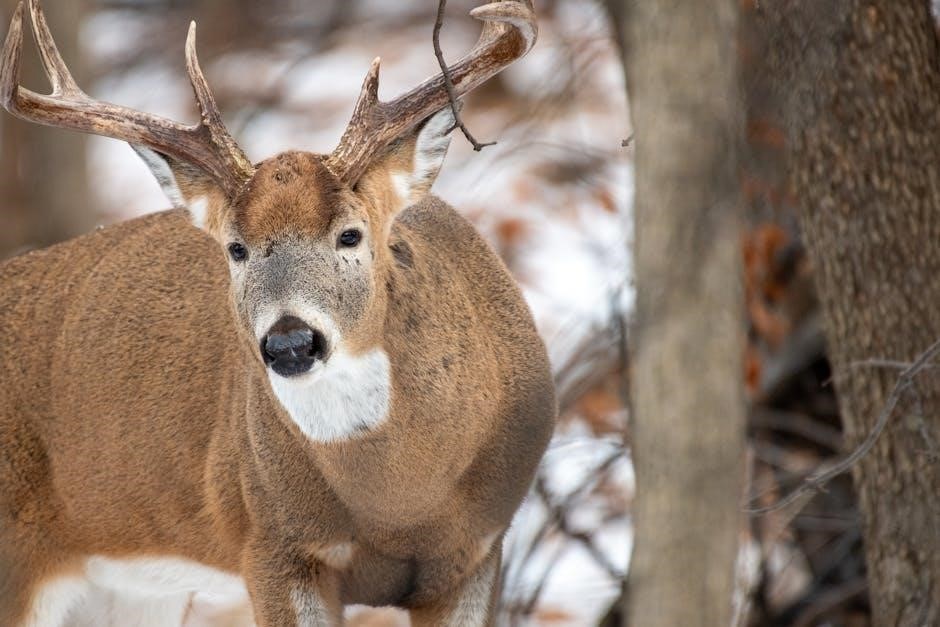
The entire deer – including the head, carcass, and any parts – must be transported directly to the hunter’s permanent residence or place of processing. Transporting a deer through CWD surveillance areas requires specific adherence to DNR guidelines.
Hunters are prohibited from stopping at locations other than their residence or a licensed processor during transport. Detailed information and potential restrictions are available in the Michigan DNR’s hunting regulations digest, ensuring compliance and responsible wildlife management.
Field Dressing and Processing Deer
Proper field dressing is crucial for preserving the quality of harvested deer. Hunters should promptly field dress the animal to cool the carcass quickly, preventing spoilage. Utilizing hygienic tools and techniques minimizes contamination risks.
Michigan hunters are encouraged to familiarize themselves with best practices for safe and sanitary processing. This includes careful removal of internal organs, thorough rinsing of the body cavity, and appropriate cooling methods like hanging or refrigeration.
Licensed processors offer professional services for deer processing, ensuring adherence to food safety standards. Hunters can also process deer themselves, following guidelines to maintain meat quality and prevent disease transmission, particularly concerning CWD.
Resources and Contact Information (Michigan DNR)
The Michigan Department of Natural Resources (DNR) is the primary resource for all deer hunting information. Their official website, michigan.gov/dnr, provides access to regulations, maps, season dates, and online licensing options.
Hunters can access detailed DMU-specific regulations, harvest reports, and educational materials through the DNR website. The DNR also offers a mobile app for convenient access to hunting information in the field.
For direct assistance, hunters can contact the DNR Wildlife Division at 517-284-9453. Regional DNR offices provide localized support and information. Reporting harvested deer is mandatory and can be done online or by phone, contributing to vital population data.