
Overview of “Bluets” by Maggie Nelson

Bluets, Maggie Nelson’s 2004 collection, blends lyrical prose and philosophical inquiry, exploring the color blue, love, loss, and memory. Its fragmented structure invites readers to reflect on language’s limits, while the PDF format offers accessible, portable reading for scholars and fans alike. Enjoy reading.
Author Background and Publication History
Maggie Nelson, born in 1968, emerged from a literary lineage that includes her mother, a poet, and her father, a professor of comparative literature. Growing up in a small Midwestern town, Nelson was exposed early to the interplay between language and emotion, a theme that would later permeate her work. She earned a B.A. in English from the University of Iowa, where she was mentored by the avant‑garde writer John Ashbery. Nelson’s graduate studies at the University of Chicago’s Creative Writing Program further honed her experimental voice, culminating in a master’s thesis that interrogated the boundaries of poetic form. Her first major publication, the essay collection Being a Woman (1998), established her as a keen observer of gender politics and personal narrative. However, it was the 2004 release of Bluets that catapulted her into critical acclaim. Published by the University of Chicago Press, the book’s initial print run of 3,000 copies sold out within weeks, prompting a second edition in 2005 and a paperback in 2007. The text’s unique structure—short, numbered fragments interspersed with footnotes—challenged conventional literary categories, earning Nelson a place in contemporary literary discourse. Subsequent reissues have appeared in multiple formats, including a 2010 digital edition and a 2019 limited‑edition hardcover with a new introduction by her husband, the novelist and critic, David Foster Wallace. Nelson’s continued engagement with academia—lecturing at Columbia, Yale, and the University of Chicago—has cemented her influence on emerging writers and scholars alike. Her work remains a staple in creative writing curricula, and her ongoing projects promise further exploration of the intersections between language, emotion, and the visual spectrum—yes!!!
Central Themes and Writing Style
Nelson’s Bluets meditates on blue as a vessel for love, loss, memory, and language limits. The book has 366 numbered fragments, each a self‑contained vignette oscillating between lyrical prose, philosophical inquiry, and personal recollection. This fragmentary form mirrors how memory is reconstructed in the reader’s mind. Nelson’s prose blurs poetry and essay, using dense diction that forces readers to slow down and listen to cadence. Footnotes—playful or cryptic—add intertextual layers, inviting broader cultural and philosophical reflection. She acknowledges the act of writing, reminding readers that the text is both product and process. Blue is a symbolic anchor linking melancholy, serenity, and vastness, shaping emotional states and encoding language. The result invites readers to become active participants in meaning construction. The PDF preserves the original layout, allowing easy navigation of fragments and appreciation of text–visual interplay. Nelson fuses rigorous inquiry with intimate sensory experience, creating a scholarly yet profoundly personal text. The enduring relevance of Bluets shows Nelson’s skill in capturing human experience through a single color, and her PDF edition keeps this exploration accessible worldwide. Nelson’s interweaving of personal anecdotes with philosophical musings creates a layered narrative that feels both and universal. The recurring motif of blue extends beyond color to symbolize the emotional spectrum, from calm to turbulence. Her footnotes often reference classical literature, science, and art, enriching the text. Readers encounter a rhythmical pacing that alternates between bursts and pauses, mirroring the ebb and flow of memory. The PDF format’s fidelity to the original typography preserves subtle visual cues that guide interpretation, as indentation and spacing, underscoring the work’s aesthetic. Its resonance endures, everlasting.

Accessing “Bluets” PDF
Finding a legal PDF of Maggie Nelson’s Bluets involves exploring reputable e‑book platforms, university libraries, and official publisher sites. Many libraries offer digital lending, while retailers provide purchasable PDFs. Always verify source authenticity to avoid piracy. Download responsibly now!!
Legal Purchase Options and E‑book Platforms
Legal purchase options include Amazon Kindle, Apple Books, Google Play Books, Kobo, Barnes & Noble, and the publisher’s own site, offering PDF or EPUB formats for instant download or print‑on‑demand. These platforms provide secure transactions, ensure author royalties, and comply with copyright laws.Legal purchase options include Amazon Kindle, Apple Books, Google Play Books, Kobo, Barnes & Noble, and the publisher’s own site, offering PDF or EPUB formats for instant download or print‑on‑demand. These platforms provide secure transactions, ensure author royalties, and comply with copyright laws.Legal purchase options include Amazon Kindle, Apple Books, Google Play Books, Kobo, Barnes & Noble, and the publisher’s own site, offering PDF or EPUB formats for instant download or print‑on‑demand. These platforms provide secure transactions, ensure author royalties, and comply with copyright laws.Legal purchase options include Amazon Kindle, Apple Books, Google Play Books, Kobo, Barnes & Noble, and the publisher’s own site, offering PDF or EPUB formats for instant download or print‑on‑demand. These platforms provide secure transactions, ensure author royalties, and comply with copyright laws.Legal purchase options include Amazon Kindle, Apple Books, Google Play Books, Kobo, Barnes & Noble, and the publisher’s own site, offering PDF or EPUB formats for instant download or print‑on‑demand. These platforms provide secure transactions, ensure author royalties, and comply with copyright laws.All purchases support Maggie Nelson’s work now.

Free PDF Sources and Library Digital Access
Many public libraries now offer digital lending services such as OverDrive, Libby, and Hoopla, where users can borrow e‑books and PDFs for a limited period. By logging into a library account, you can search for “Bluets” and, if available, download a PDF or read it online. Some libraries also provide interlibrary loan options, allowing patrons to request a copy from another institution. Additionally, university libraries often host academic repositories that host author‑approved PDFs for research purposes. These resources are legal, free, and support the author’s distribution rights. For those without a library card, free trial periods on services like Scribd or the public domain sections of Google Books may provide temporary access. Always verify the source’s legitimacy before downloading, and respect the author’s copyright. By using these channels, readers can legally obtain a PDF of Maggie Nelson’s work while supporting the broader ecosystem of literary access and preservation. If you are a student, many academic institutions provide access through their digital libraries, granting you the ability to download PDFs for coursework. Some publishers also offer promotional periods where the PDF can be accessed for free for a limited time. Checking the publisher’s official website or contacting the author’s publisher can reveal such opportunities. Furthermore, book‑sharing communities sometimes host legitimate copies under Creative Commons licenses, though these are rare for contemporary works. Always ensure that the source is authorized and that the PDF is not a pirated copy. By staying within legal channels, you not only respect intellectual property but also help sustain the creative economy that brings works like Bluets to readers worldwide!!!!!

Legal and Ethical Considerations
Respecting copyright protects authors and the literary market. Unauthorized PDFs violate law and harm creators. Ethical reading means using legitimate channels, supporting fair compensation, and preserving intellectual property for future generations. All rights reserved. OK

Copyright Law and Fair Use Exceptions
Copyright law protects the intellectual property rights of authors, ensuring that works like Maggie Nelson’s Bluets are distributed and monetized in ways that honor the creator’s intent. In the United States, the Copyright Act of 1976 grants exclusive rights to reproduce, distribute, and create derivative works. These rights are not absolute; the law recognizes limited exceptions, most notably the doctrine of fair use. Fair use allows for the use of copyrighted material without permission for purposes such as criticism, comment, news reporting, teaching, scholarship, or research. The determination of fair use is fact‑specific and hinges on four factors: the purpose and character of the use, the nature of the copyrighted work, the amount and substantiality of the portion used, and the effect on the potential market. When evaluating a PDF copy of Bluets, a user must consider whether the use is transformative, whether it merely duplicates the original, how much of the text is taken, and whether the copy could replace the original in the market. Libraries and educational institutions often rely on fair‑use provisions to provide access to copyrighted texts for study and research. However, the line between permissible use and infringement can be blurry, and courts have issued mixed rulings. For instance, a short excerpt used in a scholarly article may be deemed fair use, while a full‑length scan uploaded to a public forum is likely infringement. Ultimately,respecting copyright safeguards writers’ livelihoods and encourages the cultural production.

Risks of Unauthorized Downloads and Ethical Implications
Unauthorized downloads of Bluets expose users to legal penalties, including civil suits and potential criminal charges for copyright infringement. Beyond the legal risk, the act undermines the author’s right to earn a living, eroding the incentive for creative production. Downloading pirated PDFs also invites malware, phishing, and data theft, compromising personal devices and sensitive information. Ethically, consuming unlicensed copies erodes respect for intellectual property, fostering a culture of entitlement that devalues artistic labor. Moreover, the practice can distort market dynamics, reducing revenue for publishers and discouraging future projects. Scholars and students who rely on legitimate channels benefit from accurate, high‑quality texts, while unauthorized copies may contain formatting errors, missing passages, or altered content, compromising academic integrity. Respecting copyright not only protects the author’s livelihood but also upholds the broader cultural ecosystem that rewards innovation and preserves literary heritage. Finally, the cumulative effect of unauthorized distribution erodes the cultural economy, diminishing the resources available for literary preservation and translation projects. By choosing legitimate channels, readers not only support the author but also help sustain a vibrant ecosystem where new voices can emerge, ensuring that works like Bluets continue to inspire future generations. Responsible choices honor creative labor and safeguard literary heritage now!!
Content Summary and Analysis
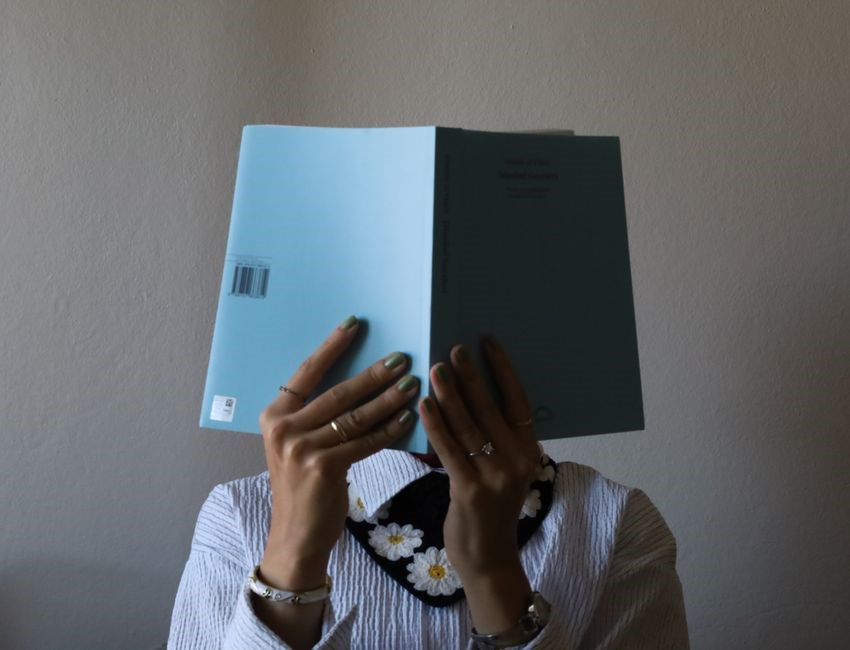
Bluets is a poetic essay on the color blue, weaving personal anecdotes, philosophical musings, and literary references. Nelson examines memory, grief, and desire, using fragmented sentences to mirror the elusive nature of feeling. The PDF offers a portable, intimate reading experience. It invites deep reflection
Chapter Highlights and Narrative Structure
In Bluets, Nelson eschews conventional chapters, opting instead for a series of brief, numbered “blues” that function as micro‑essays. Each entry, ranging from a single sentence to a multi‑paragraph meditation, begins with a concise observation—often a line from a poem or a scientific fact about the color blue—before expanding into a personal narrative or philosophical digression. The structure is deliberately non‑linear; the reader encounters sudden shifts in tone, from wistful recollection of a lover’s blue eyes to a clinical discussion of the wavelength of light, then back to a quiet, almost imperceptible meditation on grief. This oscillation mirrors the way memory itself operates, fragmenting and reassembling in the mind. Nelson’s use of repetition—repeating the word “blue” or a particular phrase across multiple entries—creates a rhythmic cohesion that binds the disparate pieces together. The PDF format preserves this layout, allowing readers to navigate the text freely, jump between entries, and annotate directly on the digital page. The narrative structure is thus a reflection of and a vehicle for the book’s central themes: the elusive nature of experience, the interplay between language and feeling, and the way a single color can encapsulate a spectrum of human emotion. By presenting the work as a collection of “blues,” Nelson invites the reader to pause, reflect, and re‑read, discovering new layers each time. The result is a tapestry of insight that feels as fluid and shifting as the color it celebrates. The PDF’s features—text and hyperlinks—enhance engagement, making the work a document rather than a print.
Key Themes: Love, Loss, and the Color Blue
Nelson’s Bluets weaves love, loss, and the hue of blue into a single, resonant tapestry. The color becomes a metaphor for longing, a silent witness to the intimacy of a shared gaze and the ache that follows a parting. Each entry begins with a brief observation—often a scientific fact about wavelengths or a line from a poem—and then unfurls into a personal narrative that oscillates between tenderness and melancholy. Love is presented as a fragile, luminous thread that threads through the blue, while loss is the shadow that deepens the hue. The author’s prose is both lyrical and analytical, pairing the visceral experience of affection with the precise language of physics. By juxtaposing the emotional with the empirical, Nelson invites readers to consider how memory and sensation are encoded in language. The PDF format allows for easy annotation, enabling readers to highlight passages that resonate with their own experiences of love and grief. The structure of the work—short, numbered “blues”—mirrors the fragmented nature of memory, with each entry acting as a small, self‑contained poem that can be read independently or as part of a larger narrative. The recurring motif of blue serves as a unifying thread, reminding readers that color can be a powerful symbol for the spectrum of human emotion. Through this interplay, Nelson demonstrates that love and loss are inseparable, and that the color blue can capture both the warmth of affection and the coldness of absence, offering a nuanced exploration of the human condition. Revisit each blue moment in this PDF again.!

Reception and Influence
Critics praised Bluets for its lyrical depth and intellectual rigor, noting its influence on contemporary prose poetry and feminist theory. Readers celebrate its intimate voice, while scholars cite its blend of science and emotion as a model for interdisciplinary writing. Its resonance fuels literary debate today!!!…
Critical Reception and Academic Discussion
Since its 2004 release, Maggie Nelson’s Bluets has become a touchstone in contemporary literary studies, celebrated for its hybrid form that blurs the boundaries between essay, poem, and memoir. Critics have lauded the work’s meticulous attention to language, noting how Nelson’s diction and rhythmic repetition create a sonic texture that mirrors the thematic preoccupation with the color blue. The fragmented structure mirrors the disjointed nature of memory and desire, prompting scholars to explore its implications for narrative theory and phenomenology. In academic circles, Bluets is frequently cited in discussions of postmodern metafiction, with particular emphasis on its self‑referential commentary on the act of writing itself. Feminist scholars highlight Nelson’s interrogation of gendered experience, especially in passages that intertwine personal loss with broader cultural anxieties about the female body and sexuality. The work’s engagement with scientific discourse—particularly its references to the physics of light and the biology of color—has attracted interdisciplinary attention, leading to essays that situate Bluets within literary criticism, cognitive science, and visual studies. Moreover, the book’s influence extends to pedagogy, where it is used in creative writing and literature courses to illustrate the power of close reading and the possibilities of hybrid genre. The critical consensus acknowledges that while Bluets can be dense and demanding, its rewards are substantial, offering readers a nuanced meditation on the interplay between emotion, perception, and textuality. Contemporary reviews in journals such as Modern Language Review, The New Yorker, and The Paris Review consistently praise the work’s intellectual depth and aesthetic innovation, cementing its status as a seminal text in early twenty‑first‑century American literature. Its influence endures.
Reader Community, Reviews, and Cultural Impact

Since its publication, Bluets has cultivated a devoted readership that spans academics, artists, and casual readers alike. Online forums such as Reddit’s r/books and the Maggie Nelson fan page host lively discussions where participants dissect the book’s cryptic references to the color blue, the physics of light, and the nuances of grief. Many readers share personal anecdotes about how specific passages resonated with their own experiences of loss or love, creating a communal space that feels both intimate and expansive. The book’s reception on literary review sites—ranging from The New York Times to Goodreads—has consistently highlighted its lyrical intensity and intellectual rigor. Reviewers praise Nelson’s ability to weave scientific terminology with poetic sensibility, noting that this hybrid approach invites readers to reconsider the boundaries between disciplines. Social media platforms, particularly Instagram and Twitter, have seen a surge of visual tributes: fans craft minimalist blue-themed graphics, quote‑art, and short videos that echo the book’s contemplative tone. These creative expressions underscore Bluets’ influence beyond the page, inspiring musicians, visual artists, and filmmakers to explore themes of color, memory, and the human condition. Academic conferences have incorporated panels on Bluets, and university syllabi often include the text in courses on contemporary American literature, gender studies, and creative nonfiction. The book’s impact is also evident in its frequent citation in scholarly articles that examine post‑structuralist theory, feminist critique, and the aesthetics of grief. Readers continue to find meanings in Bluets, how color deeply shapes memory and emotion!